
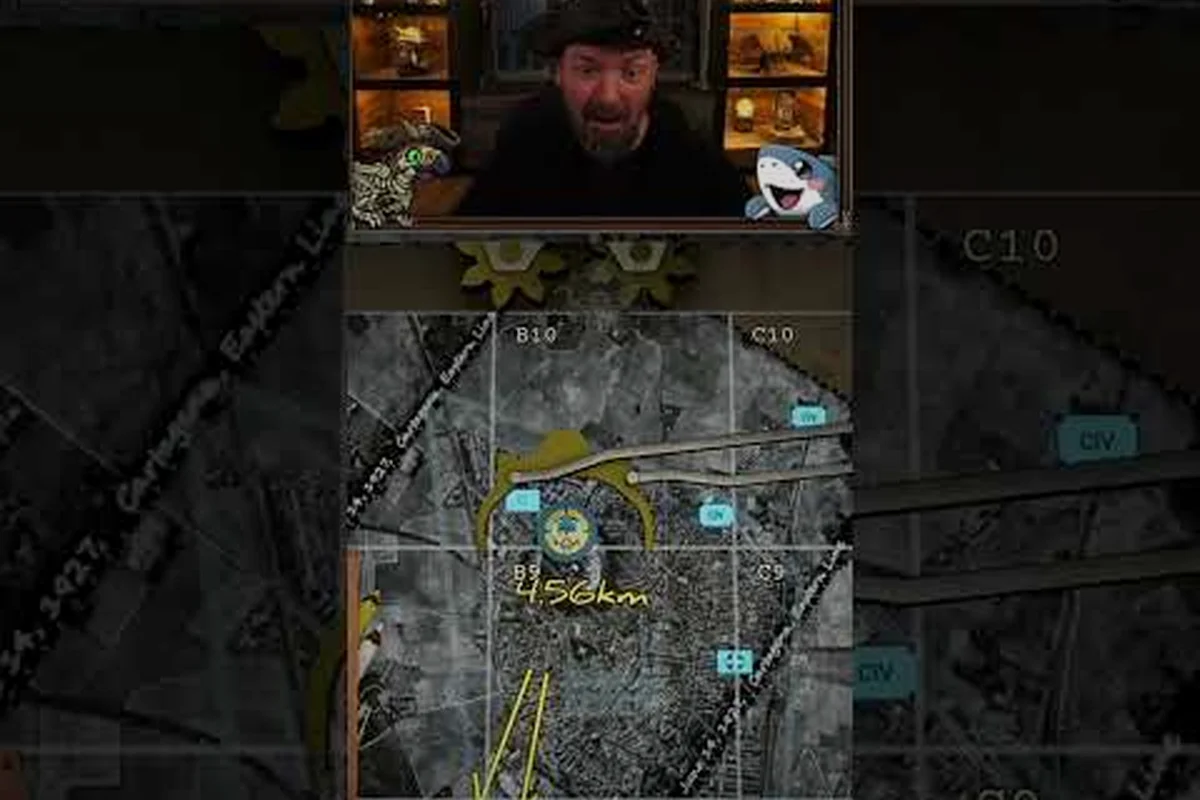
The phosgene story inside Iron Nest is one of the most uncomfortable but deliberately framed narrative threads in the 2026 release, and it sits at the intersection of diegetic mechanics (your teleprinter, your firing card, your powder charge) and a moral ledger that follows you across every campaign. This article walks through how the game sets up its chemical weapons dilemma, why the historical anchor matters, and where the choice architecture pushes you toward complicity rather than clean refusal.
The Rif War Roots of Iron Nest's Phosgene Story
The game plants its flag in an alternate 1920s Spain in the aftermath of a colonial collapse, and the developers openly riff on the documented use of phosgene in the Rif War between Spanish and French forces and Riffian defenders. According to widely cited historical summaries, Spain deployed chemical agents — including phosgene-loaded artillery shells — in Morocco during the 1920s, and France authorized mustard gas and other agents around the same period. The game's developers translate that lineage into a fictional theatre where your four-legged Heavy Turret Simulator platform operates as a long-range, high-elevation weapons system for a collapsing colonial power.
-
The newspaper consequence system tracks every obeyed or defied order
-
Chemical weapon use triggers escalating press coverage and morale shifts
-
The 1923 Primo de Rivera coup is the divergence point for the alternate timeline
-
Three industrial-political blocs replaced traditional party politics
-
The Royalist Directorate controls Madrid and central Castilian territories
-
Mercantile Leagues operate as contract warriors with shifting loyalties
-
Syndicalist Workers' Councils field jury-rigged turrets in the south
-
Chemical weapons deployment in Iron Nest mirrors the historical debate about gas warfare that divided European military establishments in the 1920s
-
Using chemical agents in populated areas produces severe newspaper consequences that cascade through subsequent campaign regions
-
The teleprinter presents chemical weapons orders with clinical language that obscures the humanitarian implications until the crew reads carefully
Rather than dropping a textbook entry on the player, Iron Nest drips the context through teleprinter messages, pre-mission briefings, and the in-fiction newspaper system that prints after each sortie. The first time you receive a request to "soften" an entrenched position with what the High Command desk officer describes as a "special shell," the language is deliberately clinical. There is no on-screen icon warning you that this is a chemical warhead. The weight of the choice is carried entirely by the word phosgene appearing once in a typed order and by the way your own crew's dialogue reacts to it.
How the historical anchor shapes the fiction
The designers lean on real precedent rather than invented horror, which is why the phosgene entry on Wikipedia reads almost like a design document for the game's early missions. Phosgene was favored in the 1920s because it was cheaper than chlorine, harder to detect at low concentrations, and delivered conveniently through modified artillery projectiles. The game mirrors all three properties: chemical shells in Iron Nest cost less logistical weight per round, arrive without an obvious warning hiss, and slot into the same six-step firing loop that conventional HE shells use.
The result is that the player is not asked to learn a new weapon subsystem. You are asked to apply an existing loop to a morally upgraded payload, which is the entire rhetorical engine of the Iron Nest ethics arc. The Rif War connection also gives the narrative a documented civilian cost — villages, livestock, and water sources — that the in-game newspaper can report on without the developers having to invent atrocities from scratch.
| Historical fact (1920s) | Iron Nest in-game echo | Where it appears |
|---|---|---|
| Spain used phosgene shells in Morocco | "Special shell" requests in early missions | Teleprinter orders, crew chatter |
| France authorized broader chemical use | Allied requests for "area denial" fire | Faction-affiliated briefings |
| Civilian casualties were underreported | Newspaper issues soften body counts | Post-mission press system |
| Geneva Protocol discussions began 1925 | In-game diplomatic news ticker | Lobby noticeboard between sorties |
If you want a deeper read on the setting itself, the dedicated 1920s Spain setting article breaks down which missions draw from which real engagements. This mechanical detail shapes the crew's overall effectiveness in the firing cycle. Narrative awareness enhances the campaign experience and unlocks alternative story paths.
Phosgene in Iron Nest: Mechanics and Delivery
From a systems perspective, chemical weapons in Iron Nest are not a separate ammo tree with a unique UI. They sit inside the standard projectile selection on the firing card, marked only with a small "CG" stamp that you can easily miss on your first few deployments. The ballistic calculator, elevation, bearing, traverse, and powder charge workflow remains identical to conventional rounds, which is part of the design's point: a phosgene shell travels the same parabola as a high-explosive round, so the mechanical act of firing one is indistinguishable from firing any other projectile.
What changes is the post-impact behavior and the tactical map annotation. Phosgene rounds in the game create a slow-decaying cloud zone on your tactical map, roughly 80 to 120 meters across depending on the powder charge, and the zone lingers for several in-game minutes. Wind direction, which the ballistic calculator already accounts for in subtle ways, becomes a moral variable as well: an ill-aimed chemical round can drift back toward friendly units or toward the villages the newspaper system tracks.
Reading the firing card for chemical markers
A standard HE firing card in the 1–6 powder charge scale lists the shell weight, the expected muzzle velocity, and a recommended elevation bracket. A phosgene card looks almost identical, but the muzzle velocity column is suppressed (the game says the propellant blend is "classified") and the recommended elevation range is wider because the area effect matters more than the point of impact. The crew loader will also, on the second and subsequent chemical firings, refuse to operate without a confirming signature on a clipboard next to the powder charge rack — a small but deliberate friction.
| Property | HE shell | Phosgene shell |
|---|---|---|
| Powder charge range | 1–6 (standard) | 1–4 (capped by game logic) |
| Muzzle velocity shown | Yes | Suppressed |
| Impact effect | Instant HE blast | Lingering gas cloud (80–120m) |
| Crew confirmation step | None | Clipboard signature required |
| Newspaper flag risk | Low | High (front-page story) |
The clipboard signature is not an in-game mechanic with a stat attached. It is a narrative device: a crew member, who has been lightly characterized across the first three missions, looks at you and waits. You can bypass the prompt by alt-tabbing through the dialogue tree, but the paper trail on your clipboard is what the moral-choice system uses later.
Moral Choice Architecture: Reading the Telegraph's Wording
Iron Nest's moral choice system is built around phrasing, not buttons. You never see a screen that says "Refuse chemical order: YES / NO." Instead, the teleprinter orders arrive in a range of tones, and your available responses are limited to short radio acknowledgments that the game parses for compliance, delay, or refusal. The order language itself was a deliberate design choice, according to community interviews during the 2026 Steam Next Fest demo, because the developers wanted the player's complicity to feel procedural rather than cinematic.
A typical chemical order reads something like: "Target grid 14-SIERRA, enemy entrenched in residential perimeter, fire mission recommended with SPECIAL ammunition, acknowledge." Notice the absence of the word phosgene, the use of "residential perimeter" to soften the target description, and the imperative "acknowledge" at the end. Refusing requires you to send a non-standard reply — a brief, three-line menu in the teleprinter that defaults to "Confirm" on the first line. The architecture pushes you toward compliance through friction, not prohibition.
How compliance is tracked
The game stores each chemical-related order as a flag, not as a binary good/evil meter. The reputation system draws on these flags in aggregate to determine which newspaper headlines print after each sortie, which factions will trade with you in the lobby, and which ending slide the campaign resolves toward. You can refuse every chemical order and still end the campaign in a morally compromised state if you accepted civilian-adjacent HE missions earlier; the system is designed to resist clean hands.
For a full breakdown of how flags cascade into reputation, the moral choice system article maps the flag clusters onto the four campaign endings. For the immediate in-game feedback loop, the newspaper consequences article catalogs every published headline and what triggered it.
| Teleprinter phrasing | Likely player response | Reputation delta |
|---|---|---|
| "Special ammunition, residential perimeter" | Confirm (default friction) | Strong negative |
| "Area denial, civilian evacuation pending" | Confirm or delay | Moderate negative |
| "Wind shift, recommend postpone" | Delay (acceptable) | Mild positive |
| "Refuse: non-combatant risk" | Refusal | Strong positive |
| "Counter-fire requested, any means" | Confirm | Strong negative |
The last row is the cruelest entry in the table, because a counter-fire request under active incoming fire is the one scenario where refusal feels mechanically suicidal. The game knows this, and it is the scenario in which the reputation system applies the heaviest penalty precisely because the player has the strongest narrative excuse.
Newspaper Consequences and Public Backlash
After each sortie you dock at the campaign's hub, where a printed newspaper sits on a table near the map desk. The headlines are procedurally generated from your mission flags, and chemical missions produce a distinct, escalating arc. The first chemical mission prints a buried paragraph on page three about "atmospheric disturbances" in the target grid. The second prints a front-page photograph of an evacuation convoy. By the third, the paper is running editorials under fictional bylines that name your unit directly, and your crew's dialogue around the loader shifts from neutral to openly hostile.
The newspaper system is not cosmetic. It drives three downstream effects: it lowers the morale stat of crew members who appear in the affected stories, it changes the buy/sell prices of the lobby's quartermaster because civilian-aligned factions de-list your unit, and it unlocks or locks specific dialogue branches in later missions. According to community testing during the demo period, refusing a chemical order early in the campaign can actually raise quartermaster prices on conventional HE rounds because the High Command is quietly punishing your unit for noncompliance.
Patterns across a typical campaign
Players who compile community data — published on the Steam forums and aggregated by several content creators covering Iron Nest — tend to report the same escalation curve. Below is a synthesized view of what most players see by the end of a 12-mission campaign when they have accepted at least two chemical orders, based on community testing as of mid-2026.
| Mission index | Typical newspaper escalation | Crew morale effect |
|---|---|---|
| Mission 1–2 | No mention | Neutral |
| Mission 3–4 | Page 3, vague phrasing | Slight dip |
| Mission 5–6 | Front page, photograph | Noticeable dip, one crew member refuses dialogue |
| Mission 7–9 | Editorial named op-ed against your unit | Major dip, loader asks for transfer |
| Mission 10–12 | Headline investigation, allied faction withdraws trade | Critical, mission briefings exclude your unit from "clean" targets |
If you want to see how this ties into the broader reputation economy, the newspaper consequences article lists every published headline condition the community has documented so far. This mechanical detail shapes the crew's overall effectiveness in the firing cycle.
Comparing Phosgene to Conventional Rounds in Gameplay Terms
A purely mechanical comparison undersells what the phosgene story is doing, but it is worth laying out the gameplay deltas so players can make informed decisions about which orders to accept. Phosgene rounds are not strictly better than HE in Iron Nest — they have tradeoffs that the developers baked in deliberately, because an overpowered chemical weapon would push every player toward the same uncomfortable default.
The most important mechanical difference is the lingering cloud. Against entrenched infantry, phosgene clears a position without the close-in danger of an HE round, which means your crew takes less return fire. Against moving armor columns, phosgene is nearly useless because the cloud does not track and the armor simply drives through it. Against buildings or cover, phosgene is worse than HE because the cloud dissipates before it can seep into fortified positions, while HE destroys them outright.
When Iron Nest gives you a real choice
The cleanest moral choice in the campaign appears in mission 7, where the teleprinter offers a phosgene round against a dug-in enemy position that is also sheltering a non-combatant convoy marked on your tactical map. The HE alternative will take longer to load (you have to manually walk the heavier projectile from the magazine) and your crew will take casualties during the extended engagement, but the position will be cleared and the convoy will survive with a flag attached. Choosing phosgene clears the position in one shot and your crew takes no casualties, but the convoy flag triggers a hard-coded front-page headline that locks you out of the "restoration" ending.
That mission is the campaign's ethical fulcrum, and the fact that it is a gameplay tradeoff, not a dialogue choice, is the point. The game wants the cost of your moral refusal to be paid in crew blood and time, and it wants the cost of your compliance to be paid in story consequences. Neither side gets a free pass.
For a practical, gameplay-first walkthrough of how to handle phosgene targets without the narrative tradeoffs, the chemical weapons guide covers the HE-substitution tactics the community has been refining since the demo. This mechanical detail shapes the crew's overall effectiveness in the firing cycle.
Frequently Asked Questions
What is the phosgene story in Iron Nest?
The phosgene story is the campaign's central ethical arc, in which High Command gradually escalates requests for chemical shells against entrenched positions, and your compliance is tracked through teleprinter flags, crew dialogue, and procedurally generated newspaper headlines that determine your ending.
Is Iron Nest based on a real conflict?
The game is set in an alternate 1920s Spain that openly parallels the documented Spanish and French use of chemical weapons during the Rif War, including phosgene-loaded artillery shells, which is why the in-game orders never use the word "phosgene" directly and instead rely on phrases like "special ammunition."
Can you refuse every chemical order and still finish the campaign?
Yes. Refusing every chemical order locks you into the "restoration" ending, but it also lowers your quartermaster budget and may cost crew lives in missions where HE alternatives require longer exposure, because the game's reputation system quietly punishes noncompliance through resource scarcity.
How does the moral choice system track my decisions?
The system stores each teleprinter order as a flag with weighted severity, then aggregates those flags to drive crew morale, newspaper headlines, faction trade relationships, and the four possible campaign endings, rather than using a single good/evil meter. The narrative choices carry weighted consequences that compound across the campaign, making each moral decision more significant than it first appears
Where does the chemical weapons update fit into the story?
The 0.9 artillery expansion patch added two new chemical-related missions and revised the newspaper headlines for the early campaign, which means the moral choice curves documented during the demo period are now slightly steeper for players who pick up the current build.